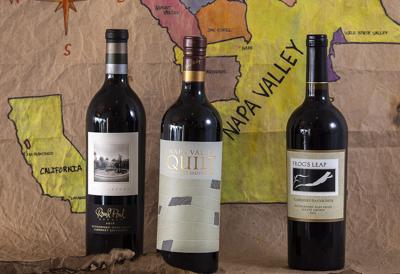
The extremely old and valuable map in this month’s photo should tell you at a glance where our journey will be taking us. In the lower left of the map is California, and the larger illustration is clearly identified as Napa Valley, one of the world’s most important and prized wine producing areas. On the inset of California, Napa is that little speck of land, some 505,000 acres, just north of San Francisco. To put that into perspective, California covers 101.5 million acres. That’s quite a ratio. Alabama covers 22 million acres and Lake Martin, at the dam’s completion in 1926, was the largest man-made body of water in the world at 44,000 acres. Today, it is officially 41,150 acres.
Napa is the shortened version of Napa Valley and Napa County, wherein lies most of the Napa Valley AVA, American Viticultural Area. The AVA designation affords producers certain protections to ensure quality and consistency. Though these areas are defined only by geography, regulations prescribe what grapes may be grown, maximum yield per acre, minimum alcohol content and so on. To be labeled with an AVA designation, a minimum of 85 percent of grapes in that product must have been grown in that AVA. To say that the Napa Valley is the most famous wine region in California, in fact the whole United States, is a gross understatement. That speaks to the quality of the wines produced there, as well.