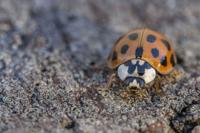
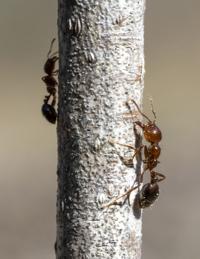
If you are like most people in the Lake Martin area, this fall your house has been invaded by dozens … or hundreds … or even thousands of pretty little “ladybugs.”
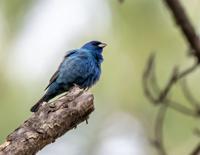
There are not too many predominantly blue-colored birds in the Alabama woods: blue jays, eastern bluebirds, blue grosbeaks, cerulean warblers and indigo buntings are about it. Several others wear some blue, like common grackles, rock pigeons …
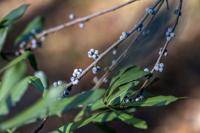
Once you start looking for wax myrtle around Lake Martin, you’ll see it all over. It’s a small, very useful tree – or maybe a large shrub – that smells like bayberry. And in fact, this plant is sometimes called southern bayberry.
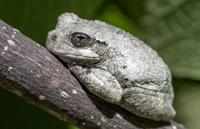
Here’s a creature that you’ve undoubtedly heard during summer, but you may not have seen. Cope’s gray treefrog is a small, nocturnal treefrog that likes wet, boggy areas and sings a lot.
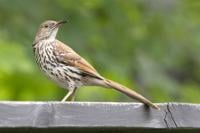
Most people wouldn’t guess it, but the secretive Brown Thrasher is the most accomplished singing bird in North America, able to make thousands of different calls. These large songbirds are year-round residents here in the Lake Martin Area, so you can enjoy their calls every day of the year.
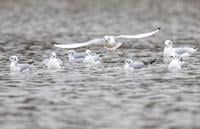
Flocks of white gulls show up on Lake Martin during the winter months to feed on schools of minnows that rise to the surface. The larger birds are usually Ring-Billed Gulls, which we have profiled in a past issue. But the smaller gulls – often rafted up with the Ring-Billed Gulls – are very …
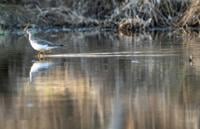
With so much water in our area, it’s not surprising that Greater Yellowlegs shorebirds would visit or even winter along Lake Martin’s shorelines and wetlands, even though they are much more common on the Gulf Coast.
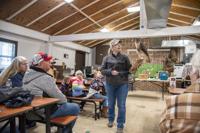
Bird watchers at Lake Martin spent a day last month immersed in education at Wind Creek State Park’s inaugural Legacy Birdfest event, sponsored by a grant from Legacy Environmental Education. The celebration of local and migratory bird life featured games, exhibits, a birdwatching stroll thr…
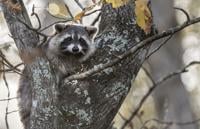
One of the cutest, most adaptable and intelligent animals in the forests around Lake Martin is the Raccoon. But while they probably live close to your home, you’re not likely to see them often because they spend most daylight hours in hiding,…
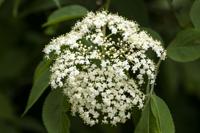
American Elderberry is a graceful, leggy shrub or small tree that usually tops out at 12 feet but can grow up to 20 feet tall – and it can be almost as wide as it is tall.
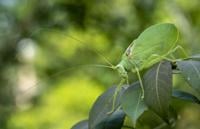
You may not have seen Common True Katydids before, but if you live in Alabama, it’s a sure bet you’ve heard them. They are responsible for one of the primary sounds of summer nights: the loud, percussive, chirp that sounds something like “kay…
In the days before the world was fully mapped, ancient cartographers sometimes drew images of dragons or inked “hic sunt dracones” – Latin for “Here Be Dragons” – in the uncharted areas of the world.
One of the most distinctive bird calls in our area is made by the Red-winged Blackbird. It’s usually written as “conk-la-lee!” or “o-ka-leeee!” and it sounds a lot like the opening trumpet lick of the National Geographic Theme. For those who …
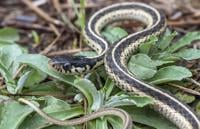
One of the shared snake experiences of Alabama kids who spend time outdoors is having a sweet-tempered Garter Snake wrap its body through their fingers. There are several other wild Alabama candidates for young snake handlers, like Ringneck S…
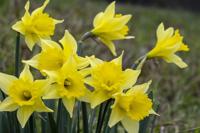
Each year in February, bright clusters of happy yellow daffodils begin to appear among the winter browns, grays and dark greens of Lake Martin. These splashes of color often show up in tended garden beds. Other times, they are clumped in fiel…
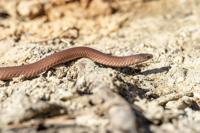
Here’s a snake that lives in the Lake Martin area that you probably haven’t seen. That’s because the Smooth Earth Snake spends most of its days underground, and when it does come out, it’s usually after dark.