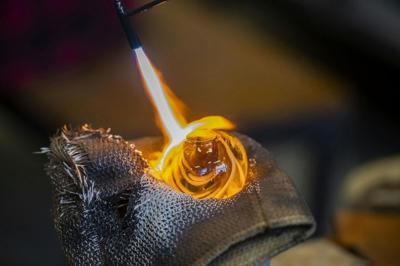
(ROCHESTER, NY) Glass as a material is full of contradictions. Depending on the form and use, glass can be fragile or strong, opaque or transparent, rough or smooth. The studios my colleagues and I teach and learn in, as glass instructors, echo this abundance of physical opposites. These environments are simultaneously immersive, complex, seductive and demanding.
When the studio is in action, you might hear glass breaking, hot metal being quenched in water, glassblowing pipes rolling on the workbench rails, and some good tunes on the stereo. You might smell hot beeswax and burning newspaper. You might feel a bit of waste glass under your shoe or the intense heat from the furnaces and a breeze from a well-placed fan. Glassblowers learn to listen, to feel and to find some focus within and among the kinetic.
×
Javascript is required for you to be able to read premium content. Please enable it in your browser settings.
kAm%96 4@?DE2?E DE:>F=: @7 E96 8=2DD DEF5:@ >2J ?@E D66> 2?JE9:?8 =:<6 2 DE6C:=6 D4:6?46 =23[ 2?5 J6E 8=2DD 2CE:DED ?665 E@ 244CF6 <?@H=6586 @7 A9JD:4D 2?5 496>:DECJ E@ 249:6G6 2?J <:?5 @7 4@?EC@= H:E9 E9:D 5J?2>:4 >2E6C:2=] %96J >FDE 49@@D6 2 >2E6C:2= H:E9 E96 56D:C65 AC@A6CE:6D 2?5 5FC:?8 E96 AC@46DD ;F586 724E@CD DF49 2D 962E 2?5 >2==623:=:EJ]k^Am
k9amv=2DD 2D 2 >2E6C:2=k^9am
kAmpE #@496DE6C x?DE:EFE6 @7 %649?@=@8J[ H96C6 x 96=A CF? E96 8=2DD AC@8C2>[ H6 AC:>2C:=J FD6 EH@ EJA6D @7 8=2DD6D] x? @FC 9@E 8=2DD DEF5:@ H6 k2 9C67lQ9EEADi^^HHH]D92??:62CE2?58=2DD]4@>^3=@8^D@7EGD3@C@Qm>6=E “D@7E” 8=2DDk^2m] %9:D 8=2DD :D DA64:7:42==J 7@C>F=2E65 E@ 36 >6=E65 :? 2 7FC?246 2?5 FD65 3J E96 8=2DD3=@H6C] xE’D 2 4@>3:?2E:@? @7 7:?6 >6D9 D:=:42 D2?5[ D@52 2D9 2?5 =:>6[ H:E9 D>2== 2>@F?ED @7 2 76H 255:E:@?2= :?8C65:6?ED E92E <66A E96 8=2DD 362FE:7F= H96? :E’D 2E :ED E@A E6>A6C2EFC6 @7 a[a__ 568C66D u29C6?96:E W`[a_c 568C66D r6=D:FDX]k^Am
kAmx? @FC 7=2>6H@C<:?8 DEF5:@[ H6 FD6 2 k2 9C67lQ9EEADi^^HHH]>FD6F>@78=2DD]@C8^2D\E96\A:A6\EFC?D^a_ad^b^af^3@C@D:=:42E6\8=2DD\GD\D@7E\8=2DD\H92ED\E96\5:776C6?46Qm3@C@D:=:42E6 8=2DDk^2m] *@F >:89E C64@8?:K6 E9:D 8=2DD 2D E96 k2 9C67lQ9EEADi^^D9@AA:?8]J29@@]4@>^9@>6\82C56?^<:E496?^2CE:4=6D^AJC6I\:D?E\;FDE\C68F=2C\8=2DD\`gad__cbf]9E>=Qm3C2?5 !JC6Ik^2m >256 :? r@C?:?8[ }6H *@C<] %9:D :D 2 DFA6C 962E\C6D:DE2?E 8=2DD] xE >6=ED 2E 2 9:896C E6>A6C2EFC6 E92? D@7E 8=2DD 2?5 2CC:G6D E@ @FC DEF56?ED :? AC67@C>65 C@5D E92E E96J 42? >6=E 2?5 D92A6 3J E@C49 :? @FC 7=2>6H@C<:?8 DEF5:@] %96 5:776C6?46D :? 496>:DECJ C62==J 492?86 9@H E96D6 8=2DD6D =@@< 2?5 3692G6]k^Am
k7:8FC6mk:>8 2=ElQ%H@ AJC6I >62DFC:?8 4FADQ DC4lQ9EEADi^^:>286D]E964@?G6CD2E:@?]4@>^7:=6D^feeaf_^@C:8:?2=^7:=6\a_ae`_`c\e_\hFcAJ`];A8n:I=:3lC3\c]`]`U2>AjBlcdU2>Aj2FE@l7@C>2EU2>Aj7:El4=:AU2>AjHlfc_Q ^mk7:842AE:@?m!JC6I 4@@<H2C6 :D >256 @FE @7 2 DA64:2==J 7@C>F=2E65[ 962E\C6D:DE2?E EJA6 @7 8=2DD 42==65 3@C@D:=:42E6] k2 9C67lQ9EEADi^^4@>>@?D]H:<:>65:2]@C8^H:<:^u:=6i!JC6I02?50!*#t)];A8Qm!:4@7=F:5:4:DE^(:<:>65:2 r@>>@?Dk^2mk^7:842AE:@?mk^7:8FC6m
kAmv=2DD[ 7C@> 2 >2E6C:2= D4:6?46 A6CDA64E:G6[ :D 42E68@C:K65 2D k2 9C67lQ9EEADi^^HHH]3C:E2??:42]4@>^D4:6?46^2>@CA9@FD\D@=:5Qm2? 2>@CA9@FD D@=:5k^2m[ >62?:?8 E92E 8=2DD’D >@=64F=6D 2C6 2CC2?865 :? 2 ?62C\C2?5@> A2EE6C? 2?5 E96C6 :D k2 9C67lQ9EEADi^^HHH]3C:E2??:42]4@>^D4:6?46^>6=E:?8\A@:?EQm?@ D92CA >6=E:?8 A@:?Ek^2m] #2E96C[ 8=2DD 8C25F2==J D@7E6?D @G6C 2 H:56 E6>A6C2EFC6 C2?86]k^Am
k9amv2E96C:?8 8=2DDk^9am
kAm~?46 J@F’G6 25;FDE65 E@ E96 492@D @7 E96 DEF5:@[ :E’D E:>6 E@ DE2CE H@C<:?8]k^Am
kAm(6 92G6 EH@ 7FC?246D :? @FC 9@E 8=2DD DEF5:@[ H96C6 H6 H@C< H:E9 D@7E 8=2DD[ D@ 2?JE:>6 5FC:?8 E96 D49@@= J62C E96C6 :D 36EH66? f__ E@ `[a__ A@F?5D @7 8=2DD] xE’D <6AE :? E96 7FC?246 2E :ED >@=E6? DE2E6 Wa[a__ 568C66D u @C `[a_c 568C66D rX[ C625J E@ 36 82E96C65 2?5 EC2?D7@C>65]k^Am
k7:8FC6mk:>8 2=ElQp? 2CE:DE AFED 2 A@=6 H:E9 >@=E6? 8=2DD @? E96 6?5 :?E@ 2 4:C4F=2C 7FC?246Q DC4lQ9EEADi^^:>286D]E964@?G6CD2E:@?]4@>^7:=6D^feeaed^@C:8:?2=^7:=6\a_ae`_`c\d_\=g`>dh];A8n:I=:3lC3\c]`]`U2>AjBlcdU2>Aj2FE@l7@C>2EU2>Aj7:El4=:AU2>AjHlfc_Q ^mk7:842AE:@?mv=2DD 2CE:DED 962E FA E96:C 8=2DD :? 2 7FC?246 D@ E92E :E’D >@=E6? 2?5 62DJ E@ >@=5] k2 9C67lQ9EEADi^^?6HDC@@>]2A]@C8^9@>6^D62C49nBF6CJl8=2DD3=@H:?8U2>Aj>65:2%JA6lA9@E@U2>AjGDlECF6Qmp! !9@E@^z6:E9 $C2<@4:4 G:2 %96 r@?G6CD2E:@?k^2mk^7:842AE:@?mk^7:8FC6m
kAm(96? H6 H@C< H:E9 E96 >2E6C:2=[ EC2?D7@C>:?8 :E H:E9 E@@=D 2?5 3C62E9 2?5 962E[ :E ?665D E@ 36 <6AE :? 2 H@C<23=6 962E K@?6 – AC@323=J 36EH66? `[`__ 2?5 a[___ u Wdhb 2?5 `[_hc rX] (96? E96 8=2DD 5:AD 36=@H E92E C2?86[ H6 A6C46:G6 :E 2D D@=:5[ E9@F89 2E E96 >@=64F=2C =6G6= :E :D DE:== 5J?2>:4 2?5 24E:?8 >@C6 =:<6 2 =:BF:5]k^Am
kAm%@ >2<6 2?JE9:?8 – 2 D4F=AEFC6[ 2 EF>3=6C[ 2 46=6DE:2= >28:42= @C3 @C 2 AF>A<:? – J@F DE2CE 3J 82E96C:?8 8=2DD @FE @7 E96 7FC?246 @? 2 >6E2= C@5] ~?46 J@F’G6 82E96C65 J@FC 8=2DD[ J@F DE2CE >2<:?8 564:D:@?D]k^Am
k7:8FC6mk:>8 2=ElQp? 2CE:DE DE2?5:?8 3J 2 36?49 4@G6C65 :? >6E2= E@@=D 9@=5D 2 =@?8 A@=6 H:E9 2? @C3 @7 >@=E6? 8=2DD 2E E96 6?5] x? E96 324<8C@F?5 :D 2 7FC?246]Q DC4lQ9EEADi^^:>286D]E964@?G6CD2E:@?]4@>^7:=6D^feeaea^@C:8:?2=^7:=6\a_ae`_`c\e_\D6F5:@];A8n:I=:3lC3\c]`]`U2>AjBlcdU2>Aj2FE@l7@C>2EU2>Aj7:El4=:AU2>AjHlfc_Q ^mk7:842AE:@?mp? 2CE:DE H@C<D :? E96 v=2DD w@E $9@A 2E #x%] (96? 8=2DD :D :? :ED >@=E6? DE2E6[ E96 2CE:DE 42? D92A6 :E 2?5 3=@H :?E@ :E] t=:K236E9 {2>2C<^#x%k^7:842AE:@?mk^7:8FC6m
kAm*@F >:89E 2D< J@FCD6=7i (92E E@@=D 5@ x ?665 E@ 368:? E@ D92A6 2?5 EC2?D7@C> E9:D 8=2DD :?E@ E96 @3;64E x 92G6 :? >:?5n x7 J@F H2:E E@@ =@?8 2?5 E96 8=2DD 368:?D 4@@=:?8 5@H?[ J@F’== ?665 E@ C6962E :E E@ k2 9C67lQ9EEADi^^HHH]63D4@]4@>^C6D62C49\DE2CE6CD^496>:DECJ^>2==623:=:EJ^QmC6:?EC@5F46 >2==623:=:EJk^2m[ 2==@H:?8 J@F E@ 4@?E:?F6 H@C<:?8 :E H:E9@FE 3C62<:?8 :E]k^Am
kAmp 3:8 A2CE @7 8=2DDH@C< :D >@G:?8 36EH66? E96 C6962E:?8 492>36C 2?5 E96 36?49[ H96C6 E96 2CE:DE k2 9C67lQ9EEADi^^HHH];24<A:?6DEF5:@]4@>^A@DE^E96\6DD6?E:2=\E@@=D\6G6CJ\8=2DD3=@H6C\FD6D\:?\E96\DEF5:@QmFD6D E@@=D E@ >@G6 2?5 DEC6E49k^2m E96 >@=E6? 8=2DD :?E@ E96 56D:C65 D92A6] *@F’== ?665 E@ 2=E6C?2E6 36EH66? E96D6 EH@ DE2E:@?D >2?J E:>6D]k^Am
kAmv=2DD3=@H:?8 :D 2 E62> 24E:G:EJ] x 92G6 A9JD:42= 2?5 :?E6==64EF2= DFAA@CE 7C@> >J 4@==628F6Di 3C62E9 7C@> E96:C =F?8D[ AC@E64E:@? 7C@> E96 962E[ 255:E:@?2= 3:ED @7 8=2DD 3C@F89E 7C@> E96 7FC?246 E@ 255 E@ >J @3;64E] (6 2=>@DE ?6G6C H@C< 2=@?6]k^Am
kAm$@[ D2J x H2?E E@ >2<6 2 G6CJ 32D:4 4=62C EF>3=6C] %9:D :D 2 D:>A=6 4@?46AEF2= @3;64E – FE:=:E2C:2?[ 5@>6DE:4 2?5 :?E:>2E6] xE :D 2=D@ 2 EC:4<J @?6 E@ >2<6 H6==i E@@ 962GJ 2?5 :E 766=D 325 :? E96 92?5[ E@@ E9:4< 2E E96 =:A 2?5 :E 5C:33=6D H96? J@F 5C:?<[ E@@ E9:? 2E E96 3@EE@> 2?5 :E H:== 3C62< 367@C6 :E :D 4@>A=6E6]k^Am
kAm|2J36 x H2?E E@ 56D:8? :E D@ :E :D D=:89E=J 4@?:42=i H:56C 2E E96 3@EE@> E92? E96 E@A[ D@ :E’D =6DD =:<6=J E@ E:A @G6C] |2J36 x H2?E :E E@ 92G6 2 =:EE=6 :?56?E 7@C E96 FD6C’D E9F>3 2D 2 86?E=6 :?G:E2E:@? E@ 96C 92?5] u:CDE x >2<6 >J 56D:8?i x 5C2H :E] x D92C6 :E H:E9 >J E62> D@ E96J 42? AC65:4E E96 AC@46DD 2?5 E96 @3;64E’D ?665D] %96? H6 368:?]k^Am
k9am(@C<:?8 H:E9 A9JD:4Dk^9am
kAmx 82E96C 8=2DD @FE @7 E96 7FC?246[ =6E :E 4@@= 2 3:E[ E96? :?EC@5F46 2 3F33=6 :? E96 8=2DD 3J 3=@H:?8 :?E@ E96 A:A6[ E96 9@==@H C@5 E92E 2EE2496D E@ E96 @3;64E x’> >2<:?8] x C6962E[ D:E 2E E96 36?49 2?5 368:? E@ D92A6 E96 8=2DD FD:?8 3@E9 8C2G:EJ 2?5 E96 y:==D[ 2 4@@=:?8 2?5 D92A:?8 E@@=] %96 y:==D :D <:?5 @7 =:<6 2 =2C86 A2:C @7 E@?8D] xE 92D?’E 492?865 >F49 :? 56D:8? 7@C a[___ J62CD]k^Am
k7:8FC6mk:>8 2=ElQp 8=2DD 2CE:DE 9@=5D 2? @C3 @7 8=2DD H:E9 E@?8D 2?5 962ED :E FA H:E9 2 E@C49]Q DC4lQ9EEADi^^:>286D]E964@?G6CD2E:@?]4@>^7:=6D^feeaeg^@C:8:?2=^7:=6\a_ae`_`c\d_\K@_><I];A8n:I=:3lC3\c]`]`U2>AjBlcdU2>Aj2FE@l7@C>2EU2>Aj7:El4=:AU2>AjHlfc_Q ^mk7:842AE:@?mv=2DD 2CE:DED FD6 2 G2C:6EJ @7 E@@=D E@ D92A6 E96:C H@C<] k2 9C67lQ9EEADi^^?6HDC@@>]2A]@C8^9@>6^D62C49nBF6CJl8=2DD3=@H:?8U2>Aj>65:2%JA6lA9@E@U2>AjGDlECF6Qmp! !9@E@^v6CCJ qC@@>6 G:2 %96 r@?G6CD2E:@?k^2mk^7:842AE:@?mk^7:8FC6m
kAmx 2D< 7@C D@>6 2:C 7C@> >J E62>>2E6[ 2?5 D96 3=@HD :?E@ E96 A:A6 H9:=6 x’> D92A:?8 E96 8=2DD] %96 3F33=6 EC2?D7@C>D :?E@ 2 A:== D92A6[ D=:89E=J H:56C 2E E96 3@EE@>] x 4@?DEC:4E E96 2C62 C:89E :? 7C@?E @7 E96 A:A6] x’> 7@4FD:?8 @? D92A6 2?5 962E[ E2<:?8 42C6 E@ ?@E =6E E96 8=2DD 86E E@@ 4@=5] x7 E96 8=2DD 5C@AD E@ 23@FE `[___ u Wdbg rX[ :E 6?E6CD 2 52?86C K@?6] x7 :E’D ?@E J6E 7:?:D965[ :E ?665D E@ 36 H2C>65 FA :? E96 C6962E:?8 492>36Cj @C :7 :E :D 5@?6[ AFE 2H2J :? 2 <:=? E@ 4@@= D=@H=J]k^Am
kAmx7 8=2DD 4@@=D E@@ BF:4<=J[ E96 >@=64F=6D 7C66K6 :?E@ 2 492@E:4 A2EE6C?[ H9:49 42FD6D DEC6DD6D E92E C6DF=E :? 7C24EFC6] %@ 4@>32E E9:D G@=2E:=:EJ[ H96? E96 8=2DD @3;64E :D 5@?6 2?5 C625J E@ 36 4@@=65[ H6 A=246 E96 @3;64E k2 9C67lQ9EEADi^^>@\D4:]4@>^8=2DD\`_`\8=2DD\2??62=:?8^Qm:? 2? 2??62=6Ck^2mi 2 <:=? D6E E@ 2 C6DE:?8 E6>A6C2EFC6 @7 hb_ u Wd__ rX]k^Am
kAm%9:D E6>A6C2EFC6 :D =:<6 2 v@=5:=@4<D K@?6 7@C @FC 8=2DDi xE’D ?@E D@ 9@E E92E E96 8=2DD H:== 567@C>[ 3FE ?@E D@ 4@@= E92E E96 8=2DD H:== DEC6DD 2?5 3C62<] ~?46 E96 <:=?D 2C6 7F==[ 2 4@>AFE6C 8F:56 E2<6D E96> 5@H? E@ C@@> E6>A6C2EFC6 @G6C 23@FE `_ 9@FCD]k^Am
kAmpD x 4@?E:?F6 E@ H@C< @? >J 4FA[ x 86E >@C6 962E[ 7@4FD:?8 @? E96 G6CJ 6?5 @7 E96 3F33=6 – E96 A2CE E92E H:== 36 E96 32D6 @7 E96 4FA] x E96? D:E 5@H? 2?5 92G6 2?@E96C >6>36C @7 >J E62> 7=2EE6? E96 3@EE@> H:E9 2 H@@56? A255=6 H9:=6 x E@@= E96 8=2DD H:E9 E96 y:==D E@ <66A :ED D92A6] %96 4J4=6 4@?E:?F6D @? 2?5 @?]k^Am
kAm%96 AC@46DD :D BF:4<[ 3FE 2=D@ E96C6 2C6 D@ >2?J =:EE=6 DE6AD E92E :E H@F=5 E2<6 ?62C=J 2 7F==\=6?8E9 3@@< E@ 56D4C:36 E96> 2==] (96? 2D<65 9@H =@?8 :E E2<6D E@ >2<6 2 EF>3=6C[ x’== @7E6? 2?DH6C[ “p3@FE `_ J62CD @C `_ >:?FE6D[ 56A6?5:?8 @? 9@H J@F E9:?< 23@FE E:>6 2?5 >2E6C:2= <?@H=6586]” %9:D :D 3@E9 8=:3 2?5 ECF6] v=2DD 56>2?5D 2EE6?E:@?[ 565:42E:@? 2?5 2 H:==:?8?6DD E@ >2<6 4@??64E:@?D 36EH66? A9JD:4D 2?5 496>:DECJ 2?5 J@FC @3D6CG23=6 6IA6C:6?46D] xE :D 2 9:89=J 492==6?8:?8 2?5 6BF2==J C6H2C5:?8 >2E6C:2= E@ H@C< H:E9 2?5 2=@?8D:56] x 4@F?E >JD6=7 G6CJ =F4<J]k^Am
kAmk6>m%9:D 2CE:4=6 :D C6AF3=:D965 7C@> k2 9C67lQ9EEAi^^E964@?G6CD2E:@?]4@>^FDnFE>0D@FC46l{66U2>AjFE>0>65:F>lC6=2E65\=:?<U2>AjFE>042>A2:8?lC6=2E65\=:?<\_U2>AjFE>04@?E6?El2CE:4=6\ahbeccQm%96 r@?G6CD2E:@?k^2m[ 2 ?@?AC@7:E[ :?56A6?56?E ?6HD @C82?:K2E:@? 3C:?8:?8 J@F 724ED 2?5 ECFDEH@CE9J 2?2=JD:D E@ 96=A J@F >2<6 D6?D6 @7 @FC 4@>A=6I H@C=5] xE H2D HC:EE6? 3Ji kDA2?mk2 9C67lQ9EEADi^^E964@?G6CD2E:@?]4@>^AC@7:=6D^DFK2??6\A64<\aff`g_bnFE>0D@FC46l{66U2>AjFE>0>65:F>lC6=2E65\=:?<U2>AjFE>042>A2:8?l3J=:?6\=:?<U2>AjFE>04@?E6?El2CE:4=6\ahbeccQm$FK2??6 !64<k^2m[ k6>mk2 9C67lQ9EEADi^^E964@?G6CD2E:@?]4@>^:?DE:EFE:@?D^C@496DE6C\:?DE:EFE6\@7\E649?@=@8J\`bfhnFE>0D@FC46l{66U2>AjFE>0>65:F>lC6=2E65\=:?<U2>AjFE>042>A2:8?l3J=:?6\=:?<U2>AjFE>04@?E6?El2CE:4=6\ahbeccQm#@496DE6C x?DE:EFE6 @7 %649?@=@8Jk^2mk^6>mk^DA2?mk^6>mk^Am
kAmkDEC@?8m#625 >@C6ik^DEC@?8mk^Am
kF=mk=:mk2 9C67lQ9EEAi^^E964@?G6CD2E:@?]4@>^8=2DD\?6:E96C\2\D@=:5\?@C\2\=:BF:5\E9:D\4@>>@?\J6E\4@>A=:42E65\>2E6C:2=\:D\DE:==\DFCAC:D:?8\D4:6?E:DED\a_ceefnFE>0D@FC46l{66U2>AjFE>0>65:F>lC6=2E65\=:?<U2>AjFE>042>A2:8?lC6=2E65\=:?<_U2>AjFE>04@?E6?El2CE:4=6\ahbeccQmv=2DDi }6:E96C 2 D@=:5 ?@C 2 =:BF:5[ E9:D 4@>>@? J6E 4@>A=:42E65 >2E6C:2= :D DE:== DFCAC:D:?8 D4:6?E:DEDk^2mk^=:mk=:mk2 9C67lQ9EEAi^^E964@?G6CD2E:@?]4@>^D62\8=2DD\2\EC62DFC6\7@C>65\7C@>\EC2D9\:D\@?\E96\564=:?6\2D\D:?8=6\FD6\A=2DE:4\E2<6D\@G6C\a`aeeenFE>0D@FC46l{66U2>AjFE>0>65:F>lC6=2E65\=:?<U2>AjFE>042>A2:8?lC6=2E65\=:?<`U2>AjFE>04@?E6?El2CE:4=6\ahbeccQm$62 8=2DD[ 2 EC62DFC6 7@C>65 7C@> EC2D9[ :D @? E96 564=:?6 2D D:?8=6‑FD6 A=2DE:4 E2<6D @G6Ck^2mk^=:mk=:mk2 9C67lQ9EEAi^^E964@?G6CD2E:@?]4@>^H96C6\5@6D\J@FC\8=2DD\4@>6\7C@>\aebca`nFE>0D@FC46l{66U2>AjFE>0>65:F>lC6=2E65\=:?<U2>AjFE>042>A2:8?lC6=2E65\=:?<aU2>AjFE>04@?E6?El2CE:4=6\ahbeccQm(96C6 5@6D J@FC 8=2DD 4@>6 7C@>nk^2mk^=:mk^F=m
kA 4=2DDlQ7:?6\AC:?EQmk6>mkDA2?m$FK2??6 !64< 5@6D ?@E H@C< 7@C[ 4@?DF=E[ @H? D92C6D :? @C C646:G6 7F?5:?8 7C@> 2?J 4@>A2?J @C @C82?:K2E:@? E92E H@F=5 36?67:E 7C@> E9:D 2CE:4=6[ 2?5 92D 5:D4=@D65 ?@ C6=6G2?E 277:=:2E:@?D 36J@?5 E96:C 24256>:4 2AA@:?E>6?E]k^DA2?mk^6>mk^Am
kAmk:>8 DC4lQ9EEADi^^4@F?E6C]E964@?G6CD2E:@?]4@>^4@?E6?E^ahbecc^4@F?E]8:7n5:DEC:3FE@Cl=66Q DEJ=6lQ96:89Ei`AIjH:5E9i`AIjQ 2=ElQQ ^mk^Am