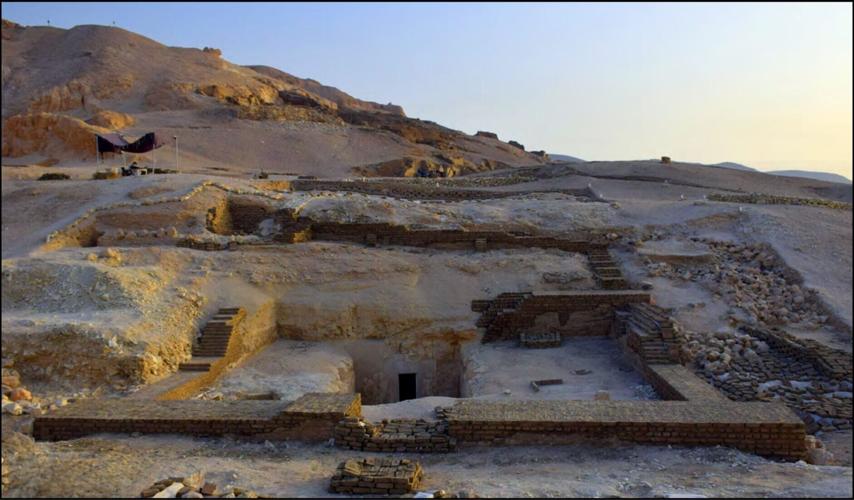
Exterior view of the superstructure of TT 209. The protective covering and visual homogenization of its walls were completed at the end of the 2026 season. (José Miguel Barrios Mufrege via SWNS)
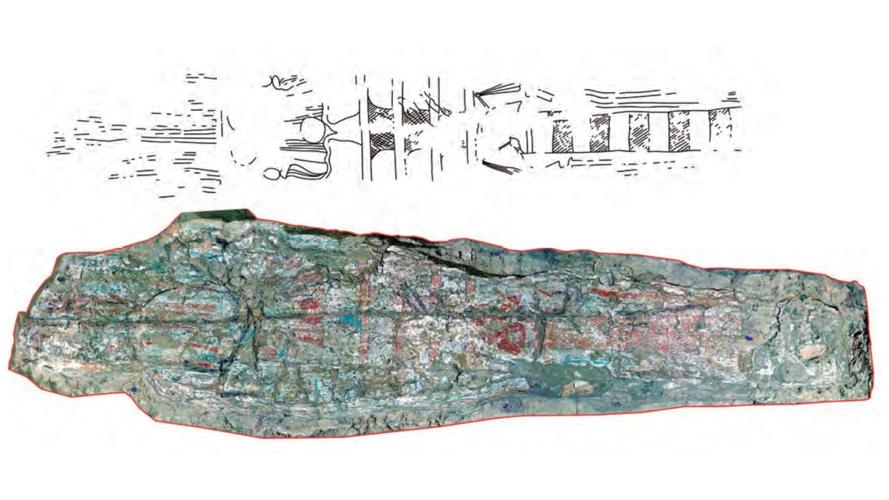
Preserved painted decoration showing an Osirian djed pillar on the outer side of the floorboard of the outer box of Coffin 3. (Jared Carballo-Pérez via SWNS)
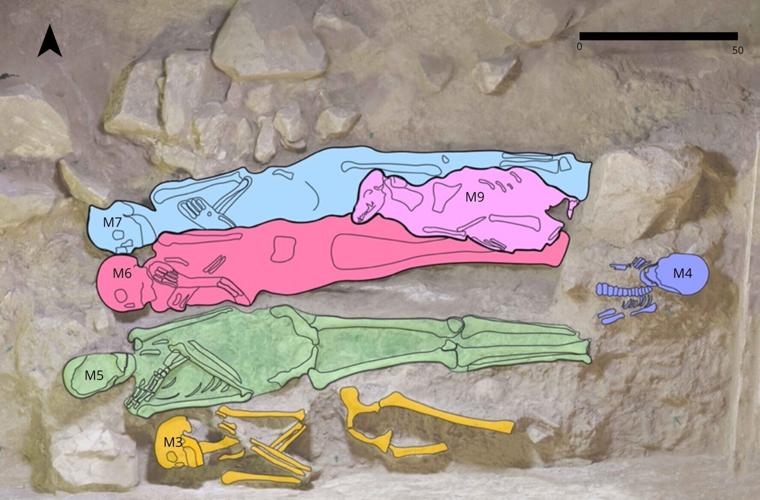
Detail of superposition and spatial relationships between individuals in SC3 (TT 209). The figure shows the relative position of several individuals, highlighting direct vertical contacts and partial overlaps between bodies. M6 and M7 are closely superimposed, with the canid (M9) placed over their lower limbs. (Jared Carballo-Pérez via SWNS)
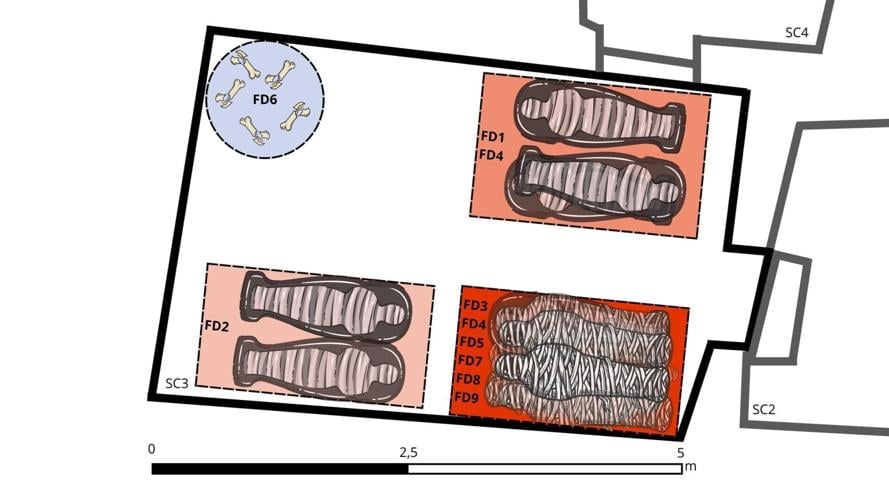
Schematic plan of SC3 in TT 209 showing the approximate spatial distribution of funerary deposits (FD). Early deposits (FD1ÂFD2) are located in the eastern/northeastern and southwestern sectors and display relatively discrete spatial organization. Subsequent and later deposits (FD3ÂFD9) are mainly concentrated in the southeastern sector. The dashed outlines indicate approximate depositional areas, while the schematic representations of mummified bodies reflect their general orientation and spatial relationships rather than exact anatomical positions. The circular area (FD6) corresponds to a secondary assemblage of disarticulated, thermally altered remains. (Jared Carballo-Pérez via SWNS)
Exterior view of the superstructure of TT 209. The protective covering and visual homogenization of its walls were completed at the end of the 2026 season. (José Miguel Barrios Mufrege via SWNS)
Preserved painted decoration showing an Osirian djed pillar on the outer side of the floorboard of the outer box of Coffin 3. (Jared Carballo-Pérez via SWNS)
Detail of superposition and spatial relationships between individuals in SC3 (TT 209). The figure shows the relative position of several individuals, highlighting direct vertical contacts and partial overlaps between bodies. M6 and M7 are closely superimposed, with the canid (M9) placed over their lower limbs. (Jared Carballo-Pérez via SWNS)
Schematic plan of SC3 in TT 209 showing the approximate spatial distribution of funerary deposits (FD). Early deposits (FD1ÂFD2) are located in the eastern/northeastern and southwestern sectors and display relatively discrete spatial organization. Subsequent and later deposits (FD3ÂFD9) are mainly concentrated in the southeastern sector. The dashed outlines indicate approximate depositional areas, while the schematic representations of mummified bodies reflect their general orientation and spatial relationships rather than exact anatomical positions. The circular area (FD6) corresponds to a secondary assemblage of disarticulated, thermally altered remains. (Jared Carballo-Pérez via SWNS)