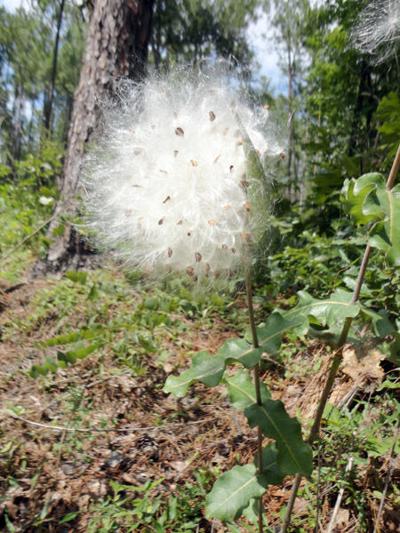
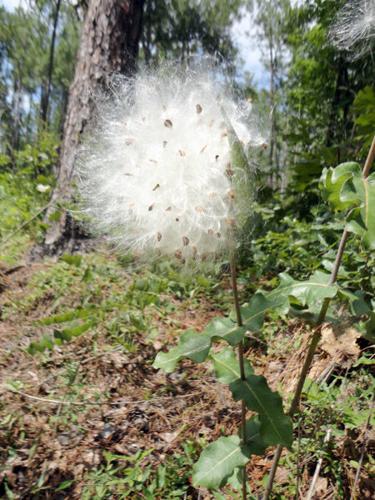
Milkweed seeds, produced in follicles, are arranged in overlapping rows with white, silky, filamentous hairs called pappus, silk, or floss. As the follicles ripen and split open, the seeds (transported by dried pappi) are at the mercy of the wind to effectively disperse.
Milkweed seeds, produced in follicles, are arranged in overlapping rows with white, silky, filamentous hairs called pappus, silk, or floss. As the follicles ripen and split open, the seeds (transported by dried pappi) are at the mercy of the wind to effectively disperse.
Though you may easily recognize its cluster of milky white flowers surrounded by hungry butterflies in the spring, its summer attire is slightly silkier. Named for the latex-laden fluid which oozes out of the stem when you compromise its integrity, milkweed also possesses a descriptive Latin moniker—Asclepius–so named for the Greek god of healing, thanks to its many non-traditional medicinal uses.
The silky structure you see this time of year is its stylish version of seed dispersal. The seeds, produced in follicles, are arranged in overlapping rows with white, silky, filamentous hairs called pappus, silk, or floss. As the follicles ripen and split open, the seeds (transported by dried pappi) are at the mercy of the wind to effectively disperse.