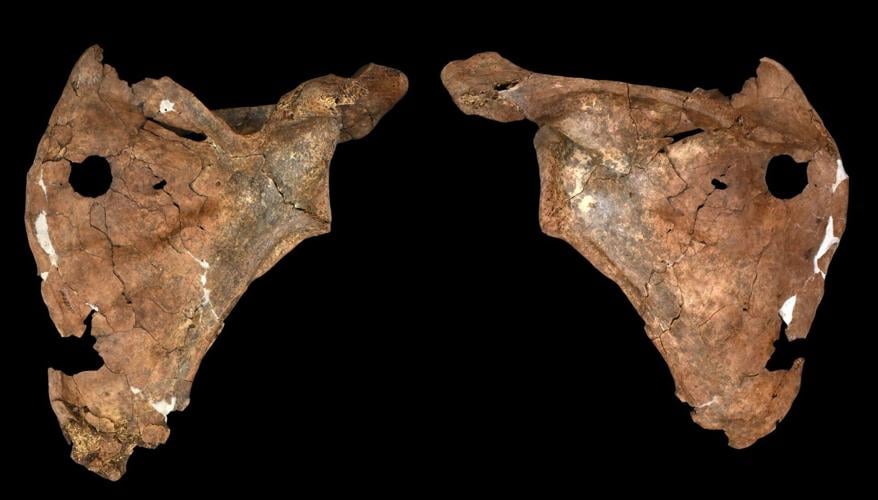
The ventral (left) and dorsal (right) views of the Shanidar A scapula. Ventral is the front of the scapula, the side that faces the ribs (chest). Dorsal is the back of the scapula. (Dr. Emma Pomeroy via SWNS)
By Talker
A fatal wound inflicted 75,000 years ago may be the earliest evidence of a human ancestor killed by a spear.
×
Javascript is required for you to be able to read premium content. Please enable it in your browser settings.
kA 4=2DDlQHA\3=@4<\A2C28C2A9Qm%96 4:C4F=2C 9@=6 H2D 7@F?5 :? E96 D9@F=56C 3=256 @7 2 k2 9C67lQ9EEADi^^E2=<6C]?6HD^a_ae^_f^_f^DEF5J\DF886DED\9F>2?D\2?5\?62?56CE92=D\4@6I:DE65\:?\D2>6\42G6D^Q E2C86ElQ03=2?<Q C6=lQ?@C676CC6C ?@@A6?6CQm}62?56CE92=k^2m H9@D6 A2CE:2= C6>2:?D H6C6 F?62CE965 :? 2 42G6 :? xC2B: zFC5:DE2?]k^Am
kA 4=2DDlQHA\3=@4<\A2C28C2A9Qm$4:6?E:DED 36=:6G6 :E 4@F=5 36 E96 62C=:6DE <?@H? 6I2>A=6 @7 “=6E92= :?E6CA6CD@?2= G:@=6?46” H:E9 2 D92CA6?65 H@@56? DA62C :? E96 7@DD:= C64@C5]k^Am
kA 4=2DDlQHA\3=@4<\A2C28C2A9Qm%96J D2J E96 C6>2:?D 2=D@ D9@H 6G:56?46 @7 2 A2:?7F= 724:2= :?;FCJ 7C@> 2E =62DE 2 J62C 367@C6 E96 G:4E:>’D 562E9]k^Am
kA 4=2DDlQHA\3=@4<\A2C28C2A9Qm%96 D9@F=56C 3=256 H2D 6I42G2E65 2=@?8D:56 2 >@DE=J 4@>A=6E6 C:89E 92?5[ EH@ =67E C:3D A=FD 2 C:89E\C:3 7C28>6?E[ 2?5 D6G6? E66E9 7C@> 2? 25F=E }62?56CE92= 6DE:>2E65 E@ 92G6 366? 2C@F?5 cd J62CD @=5 H96? E96J 5:65]k^Am
kA 4=2DDlQHA\3=@4<\A2C28C2A9Qm%96 }62?56CE92=’D D42AF=2 — 2 3C@25[ 7=2E 3@?6 D@ E9:? :? A=246D :E 364@>6D 2=>@DE EC2?D=F46?E H96? 96=5 FA E@ =:89E — H2D AC6D6CG65 2=>@DE :?E24E F?56C f]d >6E6CD Wac]e 766EX @7 C@4< 2?5 D65:>6?E 7@C 2C@F?5 fd[___ J62CD]k^Am
kA 4=2DDlQHA\3=@4<\A2C28C2A9Qm%96 @?=J >2C< H2D 2 `d\>:==:>6E6C\H:56 4:C4F=2C A6C7@C2E:@? >256 3J 2 DA62C @7 D92CA6?65 H@@5[ 244@C5:?8 E@ 2 DEF5J AF3=:D965 :? E96 ;@FC?2= k2 9C67lQ9EEADi^^HHH]?2EFC6]4@>^DC6A^Q E2C86ElQ03=2?<Q C6=lQ?@C676CC6C ?@@A6?6CQm$4:6?E:7:4 #6A@CEDk^2m]k^Am
kA 4=2DDlQHA\3=@4<\A2C28C2A9Qmk2 9C67lQ9EEADi^^HHH]42>]24]F<^Q E2C86ElQ03=2?<Q C6=lQ?@C676CC6C ?@@A6?6CQmr2>3C:586 &?:G6CD:EJk^2m 2C4926@=@8:DED[ H9@ =65 E96 6I42G2E:@?[ D2:5 2 DA62C E:A @7 7=:?E @C DE@?6 H@F=5 92G6 =67E 2 7=2E @C 2?8F=2C 9@=6]k^Am
kA 4=2DDlQHA\3=@4<\A2C28C2A9Qm%96J D2J E96 DA62C A6?6EC2E65 E96 =67E 496DE 42G:EJ 7C@> E96 7C@?E 2?5 EC2G6=65 E9C@F89 E96 3@5J — :?4=F5:?8 =F?8 2?5 =:<6=J >2;@C 2CE6C:6D — 367@C6 AF?49:?8 2 9@=6 :? E96 =67E D42AF=2[ 42FD:?8 C2A:5 562E9]k^Am
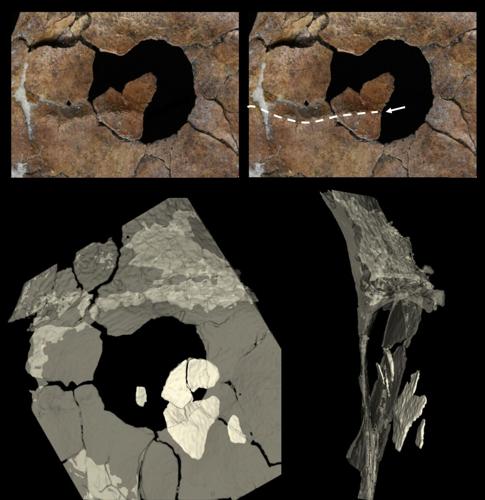
The hole in the scapula and the fragments found embedded in the sediment below the perforation. Top left: Ventral view of the hole in the scapula, showing two refitting fragments. Top right: The linea muscularis, highlighted by the dashed line, indicates that the fragments are correctly refitted. Bottom: 3D rendering of the hole and fragments embedded in the sediment underneath the scapula in situ prior to conservation. (Dr. Emma Pomeroy via SWNS)
kA 4=2DDlQHA\3=@4<\A2C28C2A9Qm%96 E62> 36=:6G6D E96 72E2= DEC:<6 >2J 92G6 366? 2? :?E6?565 “962CE D9@E]”k^Am
kA 4=2DDlQHA\3=@4<\A2C28C2A9Qm%96J 7@F?5 E:?J D92C5D @7 3@?6 5:DA=2465 3J E96 H62A@?[ E96 A@D:E:@? @7 H9:49 DF886DED 2 DA62C 6?E6C65 7C@> 23@G6 2E 2 5@H?H2C5 EC2;64E@CJ]k^Am
kA 4=2DDlQHA\3=@4<\A2C28C2A9Qm$EF5J =625 2FE9@C t>>2 !@>6C@J D2:5i “xE’D 6IEC2@C5:?2CJ E@ 92G6 2 A6C764E=J AC6D6CG65 D42AF=2 7C@> fd[___ J62CD 28@]k^Am
kA 4=2DDlQHA\3=@4<\A2C28C2A9Qm“%96D6 3@?6D 2C6 D@ E9:? E92E J@F @7E6? 5@?’E 86E 4@>A=6E6 D42AF=26 7C@> >@56C? 3FC:2=D]k^Am
kA 4=2DDlQHA\3=@4<\A2C28C2A9Qm“(6 H6C6 23=6 E@ =:7E :E @FE :? @?6 A:646 7C@> F?56C 2=>@DE 6:89E >6E6CD @7 C@4< 2?5 D65:>6?E]”k^Am
kA 4=2DDlQHA\3=@4<\A2C28C2A9QmpC4926@=@8:DED 42== E96 C6>2:?D $92?:52C p 27E6C E96 42G6 :? H9:49 E96J H6C6 7@F?5]k^Am
kA 4=2DDlQHA\3=@4<\A2C28C2A9QmsF6 E@ 564@>A@D:E:@?[ G6CJ 76H H@@56? @3;64ED DFCG:G6 7@C =@?8 A6C:@5D @7 E:>6]k^Am
kA 4=2DDlQHA\3=@4<\A2C28C2A9Qm$@>6 H2E6C=@8865 6I2>A=6D @7 DA62CD 52E65 E@ 2C@F?5 a__[___ J62CD 28@ — H96? 62C=J }62?56CE92=D C@2>65 tFC@A6 — H6C6 7@F?5 :? $49@?:?86?[ v6C>2?J[ :? E96 `hh_D]k^Am
kA 4=2DDlQHA\3=@4<\A2C28C2A9Qm%96 AC6D6CG65 DA62CD H6C6 >2?F724EFC65 7C@> 42C67F==J D6=64E65 E:>36C E@ 92G6 H6:89E 5:DEC:3FE:@? @AE:>:K65 7@C E9C@H:?8[ =:<6 >@56C? ;2G6=:?D[ 2?5 H6C6 AC@323=J FD65 7@C 9F?E:?8 82>6]k^Am
kA 4=2DDlQHA\3=@4<\A2C28C2A9Qm%96 62C=:6DE <?@H? C@F?565 H@@56? DA62C :D @G6C c__[___ J62CD @=5]k^Am
kA 4=2DDlQHA\3=@4<\A2C28C2A9QmyFDE E96 A@:?E65 6?5 DFCG:G65 27E6C 36:?8 AF==65 7C@> E96 D9@C6=:?6 2E r=24E@?\@?\$62[ tDD6I[ :? `h``]k^Am
kA 4=2DDlQHA\3=@4<\A2C28C2A9Qm%96 C6D62C49 E62> 36=:6G6D D:>:=2C E649?@=@8J >2J H6== 92G6 42FD65 E96 562E9 @7 $92?:52C p]k^Am
kA 4=2DDlQHA\3=@4<\A2C28C2A9Qm!@>6C@J[ 2 76==@H 2E }6H?92> r@==686[ r2>3C:586[ D2:5i “w@=6D =67E 3J C64C62E:@?D @7 DA62CD 7C@> E9:D E:>6 2C6 2? 6I46==6?E 7:E 7@C E96 @?6 H6 7@F?5 :? E96 }62?56CE92= D42AF=2]k^Am
kA 4=2DDlQHA\3=@4<\A2C28C2A9Qm“%92E 62C=J E649?@=@8J 23D@=FE6=J H@C<D 7@C E9:D H@F?5]k^Am
kA 4=2DDlQHA\3=@4<\A2C28C2A9Qm“(92E 6G:56?46 H6 92G6 DF886DED E92E }62?56CE92=D 2?5 E96:C 2?46DE@CD 56G6=@A65 H@@5H@C<:?8 2?5 H62A@?\>2<:?8 D<:==D >2?J E9@FD2?5D @7 J62CD 367@C6 E96 562E9 @7 $92?:52C p]k^Am
kA 4=2DDlQHA\3=@4<\A2C28C2A9Qm“%9:D A24<286 @7 42A23:=:E:6D 4@F=5 92G6 DA2??65 E96 7F== C2?86 @7 k2 9C67lQ9EEADi^^E2=<6C]?6HD^a_ac^_`^b`^2?4:6?E\5?2\2?2=JD:D\C6G62=D\6FC@A62?D\=:G65\2=@?8D:56\?62?56CE92=D\cd___\J62CD\28@^Q E2C86ElQ03=2?<Q C6=lQ?@C676CC6C ?@@A6?6CQm}62?56CE92= 9@>6=2?5Dk^2m[ 7C@> (2=6D E@ $:36C:2]”k^Am
kA 4=2DDlQHA\3=@4<\A2C28C2A9Qm!@>6C@J DF886DE65 E92E E96 562E9 >:89E 92G6 366? 2 9F?E:?8 244:56?E]k^Am
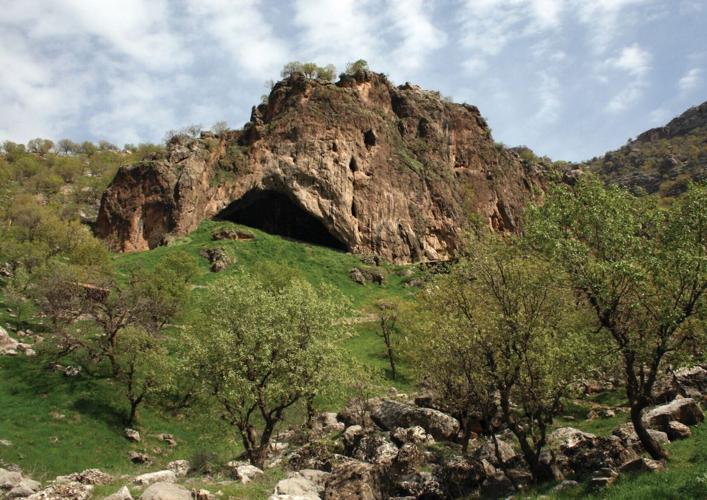
View of the entrance to Shanidar Cave in Iraqi Kurdistan. (Dr. Emma Pomeroy via SWNS)
By Talker
kA 4=2DDlQHA\3=@4<\A2C28C2A9Qm$96 D2:5i “p?:>2=D DF49 2D k2 9C67lQ9EEADi^^E2=<6C]?6HD^a_ab^`a^``^?62?56CE92=D\9F?E65\6=6A92?ED\D@\3:8\@?6\H@F=5\7665\ad__\A6@A=6^Q E2C86ElQ03=2?<Q C6=lQ?@C676CC6C ?@@A6?6CQm>2>>@E9Dk^2m >2J 92G6 366? 9F?E65 FA 4=@D6 H:E9 E9CFDE:?8 DA62CD[ D@ :E’D 62DJ E@ :>28:?6 =6E92= :?;FC:6D]”k^Am
kA 4=2DDlQHA\3=@4<\A2C28C2A9QmqFC !@>6C@J D2JD E96C6 2C6 9:?ED @7 56=:36C2E6 G:@=6?46]k^Am
kA 4=2DDlQHA\3=@4<\A2C28C2A9Qm$96 D2:5i “%96 A@D:E:@? @7 E96 H@F?5 2?5 E96 7@C46 C6BF:C65 E@ AFD9 :E C:89E E9C@F89 E96 }62?56CE92=’D 3@5J 362C E96 92==>2C<D @7 2? :?E6?565 <:== D9@E 5:C64E65 E@H2C5 E96 962CE]”k^Am
kA 4=2DDlQHA\3=@4<\A2C28C2A9Qm%96 C6D62C496CD D2J E96C6 :D ?@ H2J @7 <?@H:?8 E96 4@?E6IE 7@C E96 G:@=6?46[ 2?5 H96E96C k2 9C67lQ9EEADi^^E2=<6C]?6HD^a_aa^`_^`c^9@H\>@56C?\9F>2?D\4@\6I:DE65\H:E9\?62?56CE92=D^Q E2C86ElQ03=2?<Q C6=lQ?@C676CC6C ?@@A6?6CQm>@56C? 9F>2?Dk^2m 4@F=5 92G6 366? :?G@=G65]k^Am
kA 4=2DDlQHA\3=@4<\A2C28C2A9Qmr2>3C:586 AC@76DD@C vC26>6 q2C<6C[ H9@ =625D E96 $92?:52C r2G6 6I42G2E:@?D[ D2:5i “p== H6 42? 6G6C <?@H 23@FE E96 6?5 @7 E9:D }62?56CE92=’D =:76 :D E92E :E H2D G:@=6?E[ 2?5 42>6 2E E96 6?5 @7 2 H@@56? DA62C]”k^Am
kA 4=2DDlQHA\3=@4<\A2C28C2A9Qmw6 25565i “tG:56?46 @7 DJDE6>2E:4 G:@=6?46 :D 6IEC6>6=J C2C6 :? 566A AC69:DE@CJ]k^Am
kA 4=2DDlQHA\3=@4<\A2C28C2A9Qm“%96 G2DE >2;@C:EJ 4@>6D 7C@> A6C:@5D @7 D6EE=65 72C>:?8 4@>>F?:E:6D E9@FD2?5D @7 J62CD 27E6C 9F?E6C\82E96C D@4:6E:6D =:<6 @FC }62?56CE92=D]”k^Am
kA 4=2DDlQHA\3=@4<\A2C28C2A9Qmp? k2 9C67lQ9EEADi^^E2=<6C]?6HD^a_ae^_d^`b^E@@E9\D9@HD\42G6>6?\4@?5F4E65\56?E2=\DFC86CJ\367@C6\2?6DE96D:2^Q E2C86ElQ03=2?<Q C6=lQ?@C676CC6C ?@@A6?6CQm:?4:D@C E@@E9k^2m 7C@> E96 7C@?E @7 E96 =@H6C ;2H 925 366? DA=:E =6?8E9H:D6[ H:E9 @?=J 92=7 C6>2:?:?8[ H9:=6 DFCC@F?5:?8 E66E9 925 366? C@E2E65 :?H2C5]k^Am
kA 4=2DDlQHA\3=@4<\A2C28C2A9Qm%96 92=7\E@@E9 925 D:8?:7:42?E E2CE2C 3F:=5FA 2=@?8 E96 6IA@D65 C@@E 42?2=[ DF886DE:?8 :E DE2J65 :? E96 >@FE9 7@C D@>6 E:>6 27E6C H92E D4:6?E:DED D2J >FDE 92G6 366? >2;@C 3=F?E\7@C46 EC2F>2 E@ E96 7C@?E @7 E96 7246]k^Am
kA 4=2DDlQHA\3=@4<\A2C28C2A9Qm!@>6C@J D2:5i “$FCG:G:?8 2 3=@H E92E DA=:ED 2 E@@E9 :? E9:D 72D9:@?[ E96? 4@?E:?F:?8 E@ =:G6 2?5 62E 7@C 2 A6C:@5 @7 2E =62DE 2 J62C 2?5 >2J36 >@C6[ H@F=5 92G6 C6BF:C65 k2 9C67lQ9EEADi^^E2=<6C]?6HD^a_ae^_b^`h^?62?56CE92=D\>2J\92G6\FD65\3:C49\EC66\32C<\6IEC24E\E@\EC62E\H@F?5D^Q E2C86ElQ03=2?<Q C6=lQ?@C676CC6C ?@@A6?6CQm42C6 2?5 DFAA@CE 7C@> @E96C }62?56CE92=Dk^2m]”k^Am
kA 4=2DDlQHA\3=@4<\A2C28C2A9Qm$96 D2JD $92?:52C p >2J 92G6 366? 765 D@7E 7@@5 27E6C E96 :?:E:2= :?;FCJ]k^Am
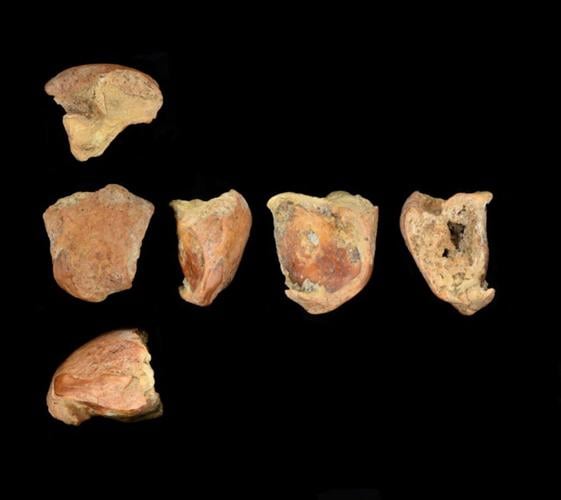
Various views of the mandibular left lateral incisor that had been spilt longitudinally. Views of the tooth, from left to right: top (chewing surface), bottom (root end). Middle: toward the front of the dental arch (mesial), toward the lips (labial), toward the back of the dental arch (distal), and toward the tongue (lingual). (Dr. Emma Pomeroy via SWNS)
By Talker
kA 4=2DDlQHA\3=@4<\A2C28C2A9Qm!C6G:@FD C6D62C49 @? D65:>6?E :? $92?:52C r2G6 D9@HD E92E A=2?E 7@@5D H6C6 36:?8 D@2<65 367@C6 4@@<:?8 2C@F?5 E96 D2>6 E:>6]k^Am
kA 4=2DDlQHA\3=@4<\A2C28C2A9Qm!@>6C@J D2:5i “%96C6’D ?@ 5@F3E E92E $92?:52C p H@F=5 92G6 925 5:77:4F=EJ 4@>>F?:42E:?8 2?5 366? :? 23D@=FE6 28@?J 7@C 2 =@?8 A6C:@5 @7 E:>6]k^Am
kA 4=2DDlQHA\3=@4<\A2C28C2A9Qm“%96 C6>2:?D @7 $92?:52C p C67=64E E96 5F2= ?2EFC6 @7 D@ >F49 @7 H92E H6 C64@8?:K6 2D 9F>2?]k^Am
kA 4=2DDlQHA\3=@4<\A2C28C2A9Qm“~? E96 @?6 92?5[ H6 92G6 6G:56?46 @7 2 E6CC:3=J G:@=6?E 6?5]k^Am
kA 4=2DDlQHA\3=@4<\A2C28C2A9Qm“~? E96 @E96C[ E9:D H2D 4=62C=J 2? :?5:G:5F2= H9@ H2D 42C65 7@C 5FC:?8 E96:C =:76E:>6]”k^Am
kA 4=2DDlQHA\3=@4<\A2C28C2A9Qmq2C<6C 25565i “xE :D 72D4:?2E:?8 E@ 92G6 6G:56?46 7@C 3@E9 4@>A2DD:@? 2?5 G:@=6?46 2>@?8 }62?56CE92=D[ @FC 4=@D6DE 6G@=FE:@?2CJ 4@FD:?D[ 6>3@5:65 :? E9:D @?6 :?5:G:5F2=]”k^Am
kA 4=2DDlQHA\3=@4<\A2C28C2A9Qm%96 DA@E H96C6 $92?:52C p H2D F?62CE965 :? a_a_ :D =@42E65 5:C64E=J 369:?5 2 =2C86 G6CE:42= 3@F=56C[ ?62C H96C6 @E96C }62?56CE92= C6>2:?D 92G6 366? 7@F?5]k^Am
kA 4=2DDlQHA\3=@4<\A2C28C2A9Qm!@>6C@J D2:5i “%96D6 }62?56CE92=D C6EFC?65 E@ E96 D2>6 A=246 E@ =2J E96:C 5625 E@ C6DE]k^Am
kA 4=2DDlQHA\3=@4<\A2C28C2A9Qm“$@>6 H6C6 56A@D:E65 367@C6 E96 62C=:6C 3@5J 925 7F==J 564@>A@D65[ D@ E9:D H2D 92AA6?:?8 H:E9:? J62CD @C 564256D]”k^Am